Free Consultancy

Contact Info

Phone: +91-7415020281
+91-8435552440
Email: info@bharatenv.com
vkvijyendra@gmail.com
Address: Bharat Envirotech, Rawatpura Colony, Phase 2, Bhatagaon, Raipur, Chhattisgarh 492013

Social Links

What Is a Miyawaki Plantation?

Grow a Forest — Right Here, Right Now

Imagine planting a tiny forest in the empty plot near your school, your neighbourhood park, or on the roadside strip in front of your office — and watching it grow into a dense, lush woodland in just a few years. That is exactly what a Miyawaki plantation does.

The idea comes from Dr. Akira Miyawaki, a Japanese scientist who studied how nature builds forests on its own. He noticed that when forests grow naturally, many different types of trees grow close together — tall ones, medium ones, short ones, and ground-cover plants, all helping each other. He copied this pattern and called it the Miyawaki method.

The key difference from ordinary tree-planting is this: instead of planting one or two types of trees in straight rows with lots of space, you plant 20 to 50 different local species very close together, in a natural, mixed pattern. The trees compete gently for sunlight and grow much faster — up to 10 times faster than a normal plantation.

In short: A Miyawaki plantation turns a small piece of unused land into a living, breathing mini-forest — using only trees and plants that naturally belong to that place.
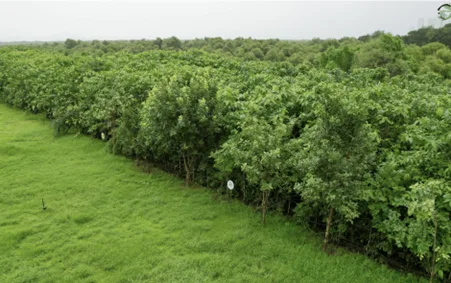
Miyawaki plantation forest setup in Raipur India

Why Should We Care?

Greening Solutions for Central India

Central India — including Chhattisgarh, Madhya Pradesh, Vidarbha (Maharashtra), and Jharkhand — is heating up. Cities like Raipur, Nagpur, Bhopal, and Ranchi have seen rising temperatures, more dust in the air, and shrinking green cover over the past few decades. A Miyawaki plantation directly fights each of these problems.

Our specialized Miyawaki solutions help industries, townships, and public bodies build native micro-forests that restore local ecological balance rapidly.

Miyawaki urban forest cooling effect in Raipur India

What a Miyawaki Forest Does for Your Neighborhood

Cools the Area Down

A dense canopy can lower the temperature in its immediate surroundings by 2 to 4°C. On a hot summer day in Raipur, that matters enormously.

Cleans the Air

Local trees like Neem, Arjun, and Peepal absorb dust, smoke, and harmful gases, offering cleaner air to breathe.

Brings Back Wildlife

When native plants return, insects, birds, and animals follow. Your community can experience local peacocks, mynas, and butterflies again.

Holds Water in the Ground

Dense roots and leaf litter act like a sponge. Rainwater soaks into the soil instead of running off, helping recharge local borewells.

Reduces Noise & Dust

A multi-layered wall of native trees acts as a natural acoustic and physical barrier against road noise and dust storms.

Zero Upkeep After 2 Years

Once the forest is established, it becomes entirely self-sustaining. No watering or weeding is needed as nature handles the rest.

How Is It Different from Ordinary Tree-Planting?

Compare the structural and carbon sequestration performance of Akira Miyawaki method forests with typical commercial plantations.

Feature Ordinary Tree-Planting Miyawaki Plantation
Species Mix 1–2 species, planted in straight rows 20–50 native species, mixed randomly
Density Wide spacing between trees Dense planting (3–5 saplings per sq. metre)
Maturity Time Takes decades to form a forest Forest-like canopy in 3–5 years
Maintenance Needs regular watering & weeding indefinitely Self-sustaining after 2 years
Biodiversity Low biodiversity (monoculture) Rich habitat for birds, insects, and animals
Carbon Absorption Slow carbon absorption Up to 30× more CO2 absorbed per acre

Which Trees Should You Plant in Central India?

This is the most important rule of the Miyawaki method: always use trees and plants that are native to your region. Foreign or ornamental species may look nice, but they do do not support local wildlife and require excessive water and maintenance.

Central India has a rich heritage of native species. The recommended plants below are grouped by their layer roles in the forest:

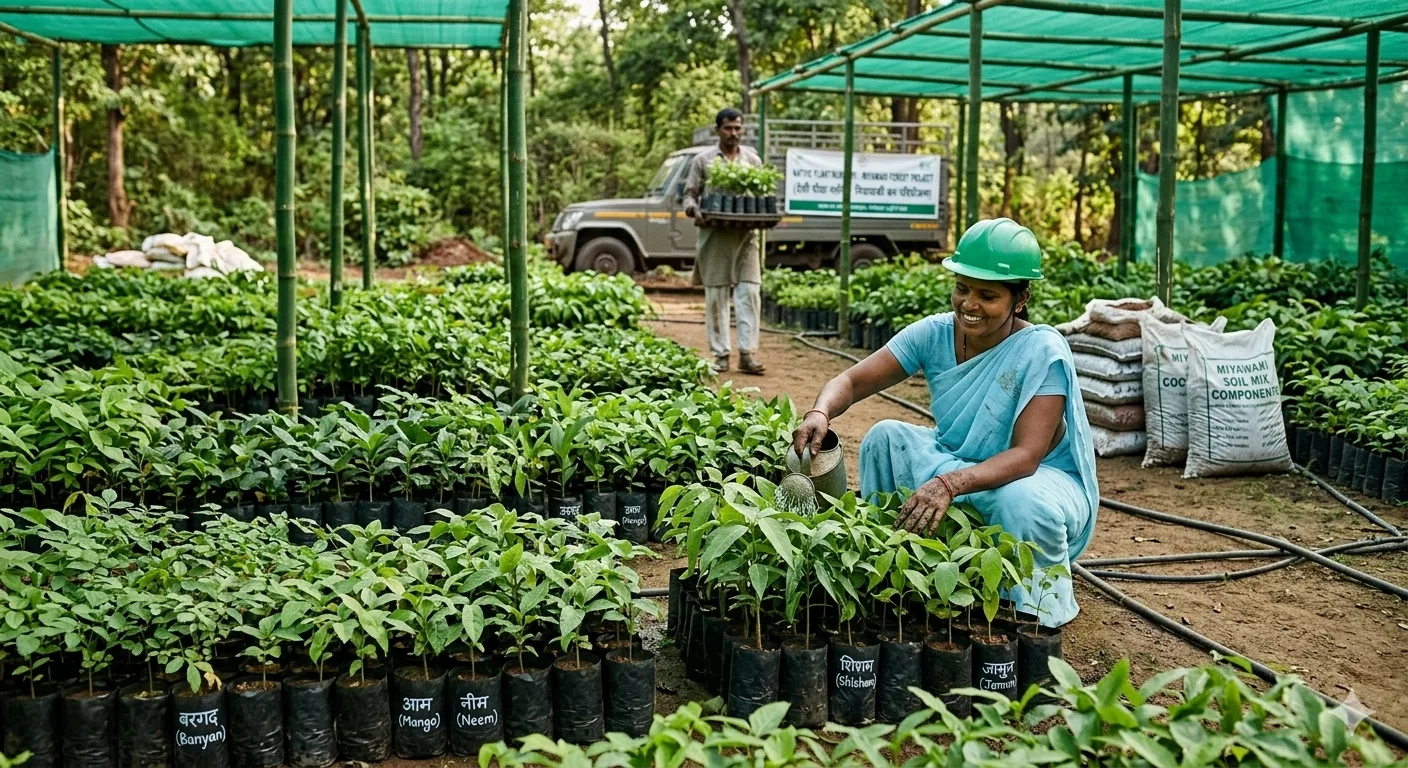
Native tree saplings in nursery Raipur India

1. Canopy & Sub-Canopy Trees (The Tall Ones)

Local Name Botanical Name Layer Key Benefit
Peepal Ficus religiosa Canopy Essential habitat for over 100 bird species
Bargad / Banyan Ficus benghalensis Canopy Provides dense shade, supports diverse wildlife
Mahua Madhuca longifolia Canopy Food source for local tribal communities & animals
Saja / Saj Terminalia tomentosa Canopy Dominant native forest tree of Central India
Arjun Terminalia arjuna Sub-canopy Excellent for riverbanks & local water table recharge
Amaltas Cassia fistula Sub-canopy Medicinal values, attracts bees & pollinators
Tendu Diospyros melanoxylon Sub-canopy Iconic Central Indian species, key wildlife food
Jamun Syzygium cumini Sub-canopy Fruit source for birds, develops deep-rooted systems
Char / Chironji Buchanania lanzan Sub-canopy Edible nuts, culturally important to local communities
Bel Aegle marmelos Sub-canopy Medicinal properties, highly drought-tolerant

2. Shrub Layer (Medium-Height Plants)

Local Name Botanical Name Layer Key Benefit
Karanj Pongamia pinnata Shrub Nitrogen-fixing capabilities, exceptionally fast-growing
Mehendi / Henna Lawsonia inermis Shrub Provides dense wildlife cover, cultural significance
Kachnar Bauhinia variegata Shrub Beautiful flowers, attracts native pollinators and butterflies
Bans / Bamboo Bambusa bambos Shrub / Edge Rapid biomass generation, excellent soil erosion control
Karonda Carissa carandas Shrub Thorny protective barrier, edible berries
Adusa / Malabar nut Adhatoda vasica Shrub Medicinal understorey cover, deters grazing naturally

3. Ground Cover & Herbs

Local Name Botanical Name Layer Key Benefit
Doob Grass Cynodon dactylon Ground Cover Strong soil binding, highly drought-tolerant
Ashwagandha Withania somnifera Herb Medicinal herb, fills empty understorey gaps
Shatavari Asparagus racemosus Herb / Climber Medicinal root, provides vertical texture to undergrowth
Tulsi Ocimum tenuiflorum Herb Repels plant pests naturally, high air-purification value
Wild Turmeric Curcuma aromatica Ground Cover Edible tuberous roots, increases soil biodiversity

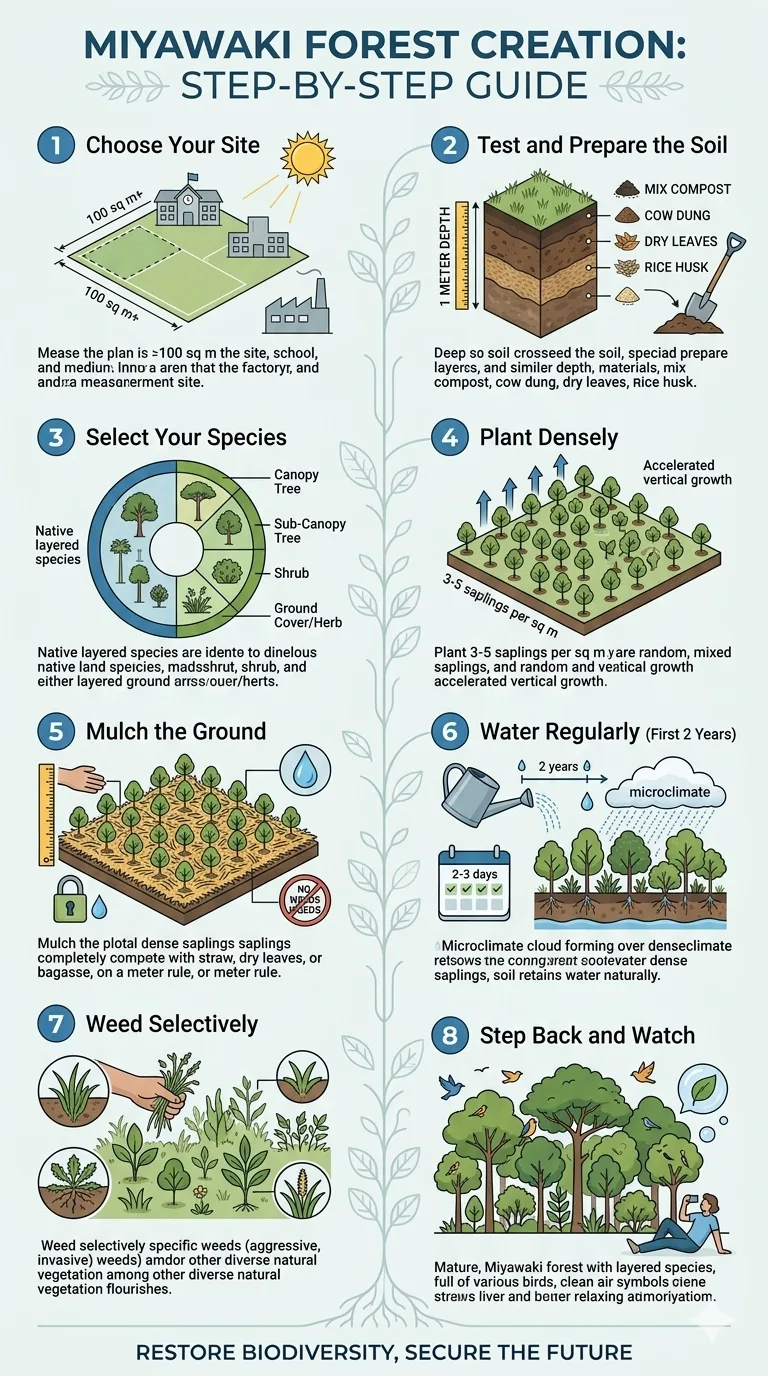
How to Create a Miyawaki Plantation — Step by Step

A plain-language guide for community members, schools, and corporate groups in Central India to build a mini-forest successfully.

1
Choose Your Site

Any land area of 100 square metres or more will work—a school ground corner, factory boundary, roadside strip, or village common land. The plot needs direct sunlight.

2
Test and Prepare the Soil

Dig the soil to about 1 metre depth and loosen it well. Mix in compost, cow dung, dry leaves, and rice husk to improve soil organic structure. Avoid chemical fertilisers completely.

3
Select Your Species

Pick 20 to 40 native species from our list. Ensure you include a balanced selection of all layers (Canopy, Sub-Canopy, Shrubs, and Ground Cover/Herbs).

4
Plant Densely

Place 3 to 5 saplings per square metre. Plant them in a random, mixed pattern rather than neat rows. This competition stimulates accelerated vertical growth.

5
Mulch the Ground

Cover the entire planted area with a 5 to 10 cm layer of straw, dry leaves, or sugarcane bagasse. This locks soil moisture, suppresses weeds, and composts naturally.

6
Water Regularly (First 2 Years)

Irrigate every 2 to 3 days during the first two summers. After year two, the forest develops its own microclimate and retains enough soil moisture naturally.

7
Weed Selectively

In the first year, remove aggressive invasive weeds that block sunlight from young saplings. Let other natural vegetation flourish.

8
Step Back and Watch

After year two, stop intervening. The forest is self-sustaining. Visit to monitor growth, take photos, and enjoy the returning birds and clean air.

Soil preparation and mulching for Miyawaki plantation in Raipur India

How Much Land Do You Need?

There is no minimum size limit. The Miyawaki method excels in converting narrow or small unused spaces into miniature biodiverse ecosystems.

100 sq. m (Large Room Size)

Enough for a local neighborhood pocket forest or backyard woodland.

500 sq. m (Half Tennis Court)

Ideal size for schools, public parks, colleges, and small institutions.

1,000 sq. m & Above

Perfect for residential townships, corporate office campuses, and industrial sites.

Note: The smaller the space, the more critical the dense sapling spacing becomes. Even a 10m x 10m patch can support over 200 saplings of 20 different species.

Estimated Cost of Miyawaki Forest

Indicative budget estimates for soil preparation, saplings, mulching material, and labor in Central India/Raipur:

100 sq. m
₹15K - 30K
300 - 500 saplings
500 sq. m
₹60K - 1.2L
1,500 - 2,500 saplings
1,000 sq. m
₹1.2L - 2.5L
3,000 - 5,000 saplings
Financial Support: Local government initiatives (like CAMPA funds, MNREGS, and State Forest Department campaigns) often provide subsidies or full funding for corporate/community greening projects.

Who Can Initiate a Miyawaki Plantation?

Miyawaki plantations are highly inclusive. Projects have been successfully initiated by:

  • Schools and Colleges: Enhancing environmental campus grounds.
  • Resident Welfare Associations (RWAs): Greening common society parks.
  • Municipal Corporations: roadside dividers and open city spaces.
  • Railway Departments: Greening station properties or track buffers.
  • Industries and Factories: Building regulatory green buffer zones.
  • Individual Landowners: planting private backyards.
  • Gram Panchayats: Restoring common village pasture lands.

In Chhattisgarh and Madhya Pradesh, several forest offices and urban local bodies have already taken up Miyawaki projects. Connect with your nearest forest division or contact our team to coordinate.

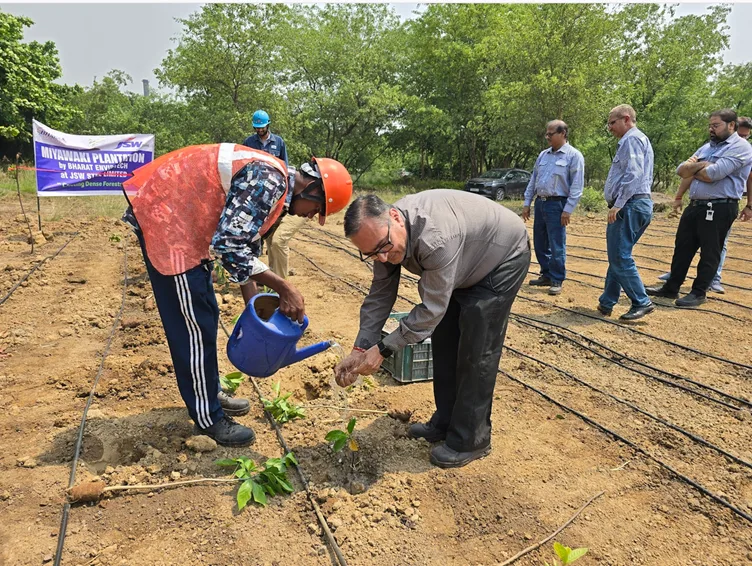
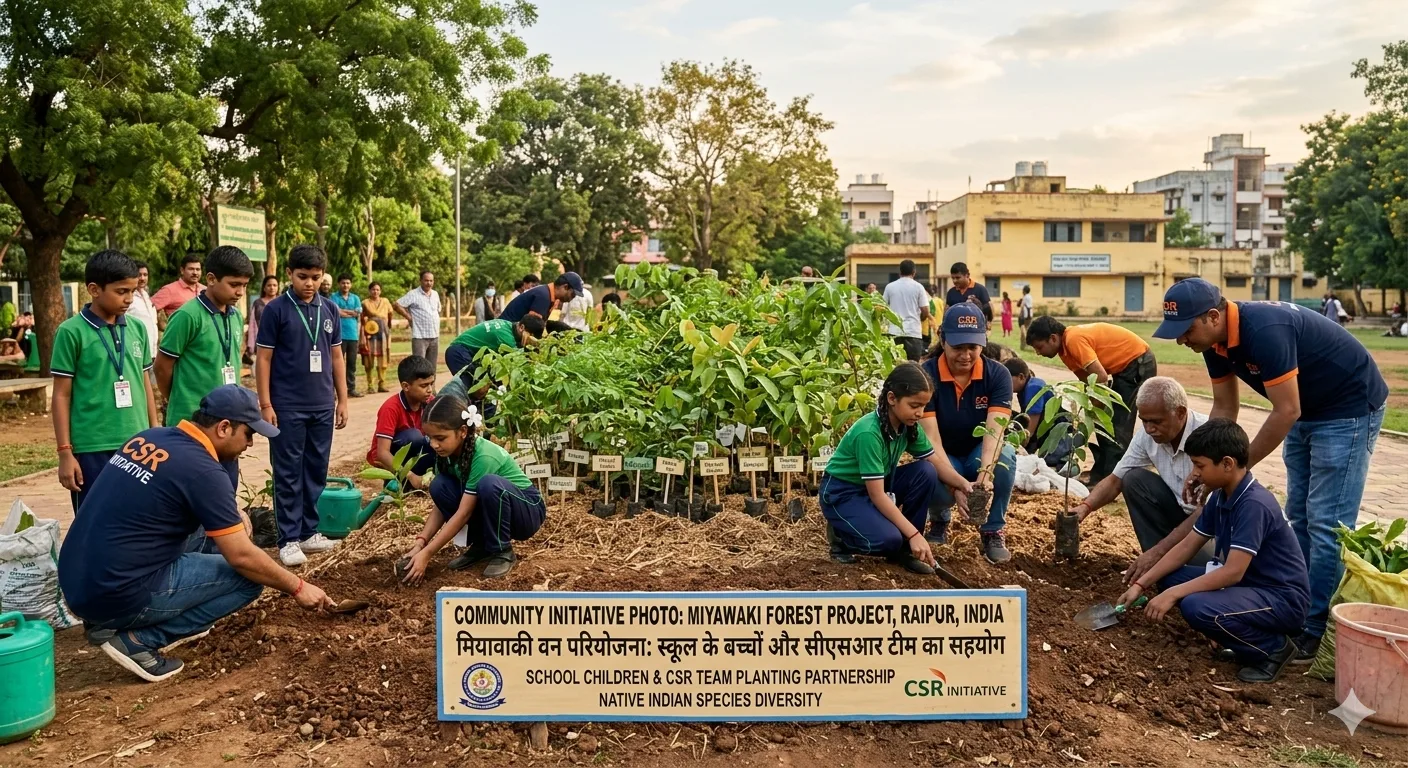
CSR Miyawaki plantation drive in Raipur India

Our Mission

To promote sustainable groundwater recharge and rapid greening in Raipur and across India through innovative, reliable, and environmentally responsible Miyawaki Plantation solutions.

Frequently Asked Questions

Quick answers to common queries about soil compatibility, timeline, and species selection in Central India.

Yes. Black cotton soil can become heavily waterlogged, so the key is to improve drainage during soil preparation. We recommend adding sand and organic matter, and raising the planting bed slightly. Choose native species like Arjun, Karanj, and Jamun that naturally tolerate seasonal waterlogging.

Monsoon (June to September) is the ideal time to plant since saplings establish quickly with natural rainfall. However, with proper drip or manual irrigation support, planting in October and November is also successful. We advise avoiding planting during peak summer heat (March to May).

During the first year, you should protect the plot using a simple fence made of thorny native shrubs (like Karonda) or bamboo poles. After 2 years, the dense growth itself acts as a natural cattle barrier.

No. These are commercial exotic monocultures and do not support local biodiversity. Eucalyptus in particular depletes local groundwater tables rapidly. For a healthy, biodiverse Miyawaki forest, stick strictly to the native Central Indian species listed above.

You will see rapid vertical growth within 6 months. By year 2, the canopy begins to close, shading out weeds. By year 5, it feels and functions like a mature natural forest. This fast transformation is highly exciting for communities and CSR drives!

Get Expert Environmental Consultation

Need professional guidance for water auditing, CGWA compliance, or environmental clearance?
Our expert team led by Dr. Vijyendra Kumar is ready to help you with free consultation.